
There's a version of this conversation I've had dozens of times. A bike shop owner, doing good trade in-store, community well established, mechanics booked out weeks ahead — but their website is effectively a digital business card
Why Bike Shops Finally Have a Shopify Setup That Actually Works
David Cook
Fair enough. Let me rewrite the whole thing properly.
Why Independent Bike Shops Are Finally Winning Online — And What's Making It Possible
There's a version of this conversation I've had dozens of times. A bike shop owner, doing good trade in-store, community well established, mechanics booked out weeks ahead — but their website is effectively a digital business card. Stock isn't on there. Pricing is out of date. The only way a customer can contact them is through a form that goes to an inbox nobody checks.
And when I ask why, the answer is almost always the same: "We tried to get online properly once. It was too hard, too expensive, or it just didn't work."
That story made sense for a long time. The tools weren't built for how a bike shop actually operates. But that's changed — and it's changed significantly.
I know this industry from the inside
Before founding DAC Design, I spent over 20 years working in and around the cycling industry in Australia. Managing family-owned bike stores. Working in wholesale distribution of Trek and other major brands across the country. Dealing with supplier catalogues, distributor relationships, complex inventory across multiple locations, and the day-to-day reality of running a workshop alongside a retail floor.
I know what it means when a customer comes in asking for a specific Shimano groupset component and the system says it's in stock but it isn't. I know how a busy Saturday morning on a shop floor feels when your POS and your website are two completely separate things. I know that most bike shop owners aren't looking for sophisticated technology — they're looking for something that works and doesn't create more problems than it solves.
That's the lens I bring to every cycling retail build we do at DAC Design.
The real problem isn't being online. It's being disconnected.
Most independent bike shops that have tried ecommerce have run into the same structural problem: their online store, their in-store point of sale, and their actual inventory all live in different places. When a bike sells on the floor, the website doesn't know. When someone orders online, the team finds out through an email. Stock levels drift. Customers turn up to collect something that was sold an hour ago. Staff spend time reconciling information between systems instead of serving customers.
None of this is the fault of the people running the shop. It's the fault of a setup that was never properly unified in the first place.
What Shopify POS actually does for a bike shop
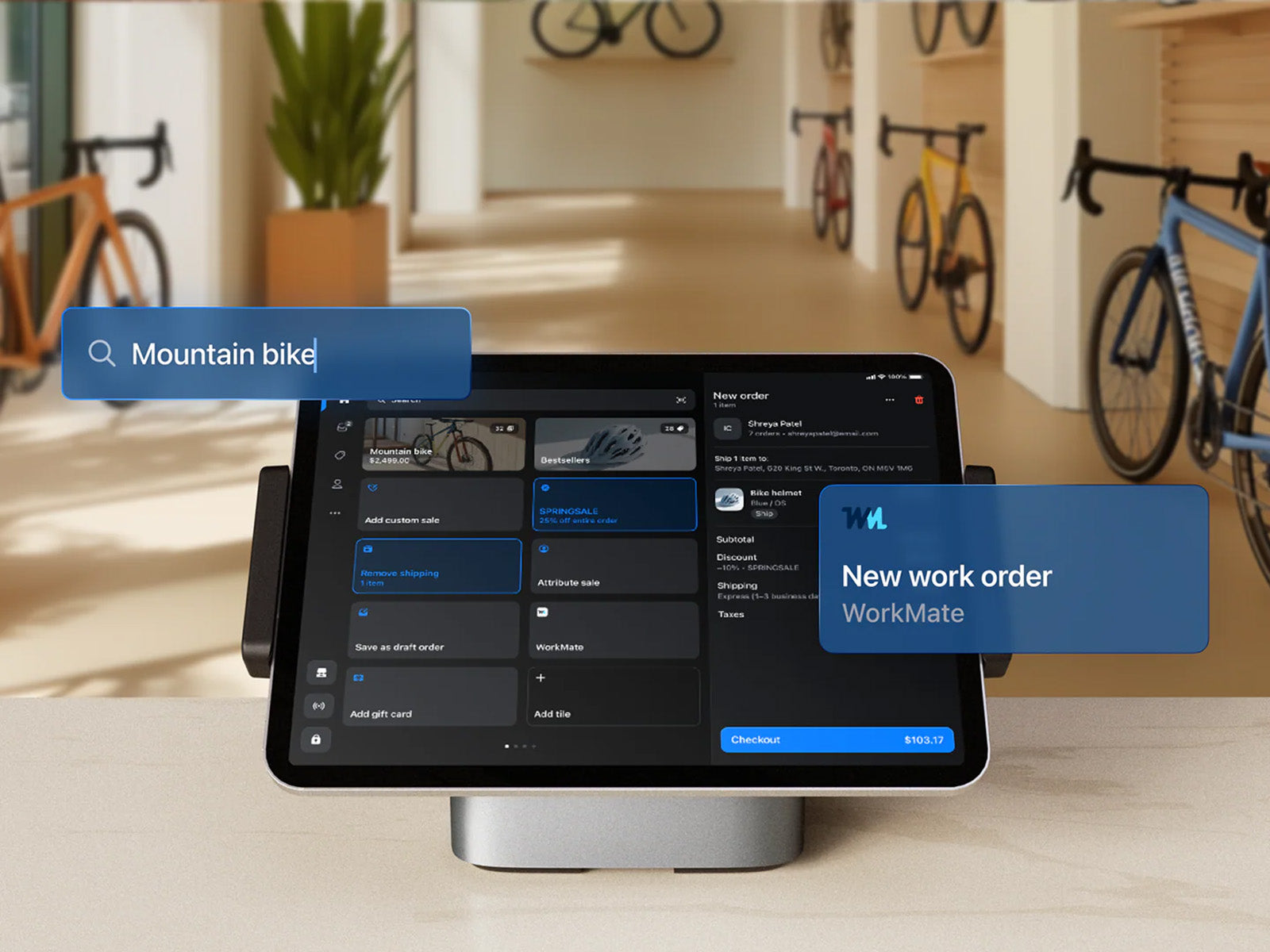
Shopify POS is the piece that changes this. It's not a separate system sitting alongside your online store — it's the same platform, running both. When a product sells in-store, it updates online instantly. When an order comes in online for click-and-collect, it appears on the POS immediately. Your customer records, purchase history, gift cards, and store credit all carry across both channels without any manual work.
For an independent bike shop, the practical impact of this is significant. You can have your full product range on your website with accurate stock levels — not a curated selection updated once a week, but your actual inventory, in real time. A customer researching a bike at 10pm on a Sunday can see what you have, what size is in stock, and book a fitting or service without calling anyone. When they walk in, your team already has the context.
Shopify POS also handles the things that make a bike shop's operation different from a standard retailer. Multiple price levels for trade customers. Detailed product variants across size, colour, and specification. Buy online, pay in-store. Lay-by. The kind of customer relationship tracking that lets you know a regular rider is due for a service on their bike purchased eighteen months ago.
It's not a complicated system. That's the point. It's designed to be run by a small team without a dedicated IT person, and it scales cleanly as your business grows.
The collapse of the big online discounters is actually good news for independents
When Wiggle and Chain Reaction Cycles both collapsed into administration in 2023 and 2024, it was a reminder that the race-to-the-bottom model of online cycling retail was never a sustainable business — and it was never the game independent bike shops should have been playing.
The customers who bought from Wiggle because it was cheapest were never your customers. The customers who are yours are the ones who want to know the person selling them a bike, who value being fitted properly, who bring their bike back for service, and who become part of the community around your store. Those customers are absolutely online — researching, comparing, looking for local options — but they're not just looking for the lowest price. They're looking for the right place to buy.
A well-built Shopify store puts you in front of those customers at the moment they're looking. Local search, real product information, accurate stock, easy service booking — these are the things that convert a browser into a customer who walks through your door.
The independent bike shops winning right now have one thing in common
They've stopped treating their website as a separate project from running their business. Their online store and their physical store are the same operation, sharing the same data, presenting a consistent and accurate face to customers at every touchpoint.
That's not a complicated thing to achieve. It requires the right platform, set up properly, by someone who understands what a bike shop actually needs. Not an agency pitching enterprise software at an independent retailer. Not a generic ecommerce build that ignores the specific complexities of cycling retail. A Shopify setup built around how your shop runs, with the integrations that make sense for your size and your operation — and nothing that doesn't.
We've built Shopify stores for cycling businesses including Fox Factory, Velofix, Park Bikes, and Sydney Bike Repairs. If you're an independent bike shop looking to get your online and in-store operations working properly together — or if you're on a platform that's making things harder than they should be — we'd be glad to have a conversation.

About the Author
David Cook
David is a Sydney-based designer and ecommerce strategist with over 20 years’ experience across digital, retail, and product design. He’s delivered hundreds of digital projects for creators, brands, and retailers - balancing commercial thinking with refined visual execution.
His practice also includes photography and collaborative apparel projects, and he advises regularly on digital strategy within fashion, interiors, and the arts.
Where Good Ideas Get Built
We work with good people doing ambitious things. If you’re ready to elevate your eCommerce presence, get in touch. We’ll bring clarity to your ideas, and deliver a Shopify experience built on strategy, design, and trust.